
In today’s world, where smartphones have become an essential lifeline of daily life, mobile batteries that support their operation can also be considered a vital part of our everyday infrastructure. However, the lithium-ion batteries built into mobile batteries are delicate by nature, and improper handling can lead not only to reduced performance but also to serious risks such as fires.
In this article, we provide a professional overview of proper charging practices for using mobile batteries safely and for the long term, along with guidance on how to choose the right battery and dispose of it appropriately.
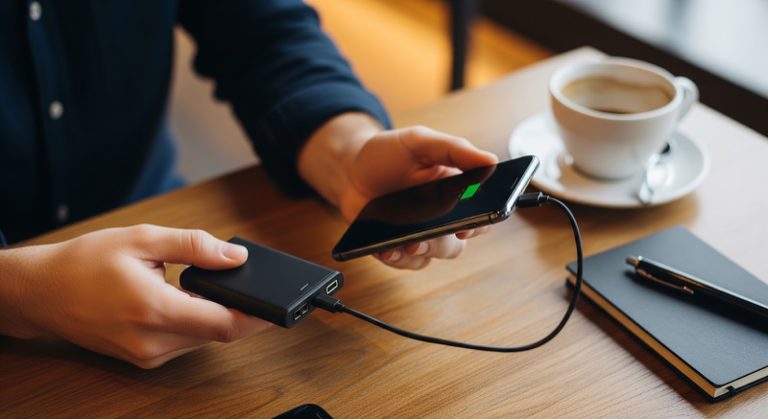
Characteristics of Lithium-Ion Batteries and the Mechanism of “Degradation”
Lithium-ion batteries, which are used in most mobile batteries, gradually lose their ability to store power (degrade) as charging and discharging cycles are repeated. Generally, their lifespan is said to be around 300 to 500 cycles, but this can vary significantly depending on the usage environment.
The main factors that accelerate degradation include the following:
- Thermal stress: Use or storage in high-temperature environments
- Over-discharge: Leaving the battery unused when the charge level is at zero
- Overcharging: Continuing to supply power for long periods while the battery is fully charged
Proper Charging and Usage Methods to Extend Battery Lifespan
To maintain both safety and performance, the following usage practices are recommended.
■ Use Appropriate Charging Equipment
When charging, use the cable and AC adapter supplied with the product, or equipment that meets the specifications recommended by the manufacturer. Using non-compliant products or charging via a PC’s USB port can result in unstable voltage, reduced charging efficiency, and increased strain on the battery.
■ Proper Temperature Management (Avoid High and Low Temperatures)
Lithium-ion batteries are sensitive to extreme temperature changes, so avoid leaving them in places exposed to direct sunlight or inside cars during summer. In addition, charging a smartphone while using it (“charging while in use”) can cause both the device and the battery to generate heat, significantly accelerating degradation.
■ Maintain an Appropriate Battery Charge Level
Leaving a battery unused for long periods at a 0% charge level (over-discharge) can cause internal chemical reactions that degrade the electrodes, potentially making recharging impossible. Even when not in use, it is important to charge the battery periodically and maintain a moderate charge level for long-term storage.
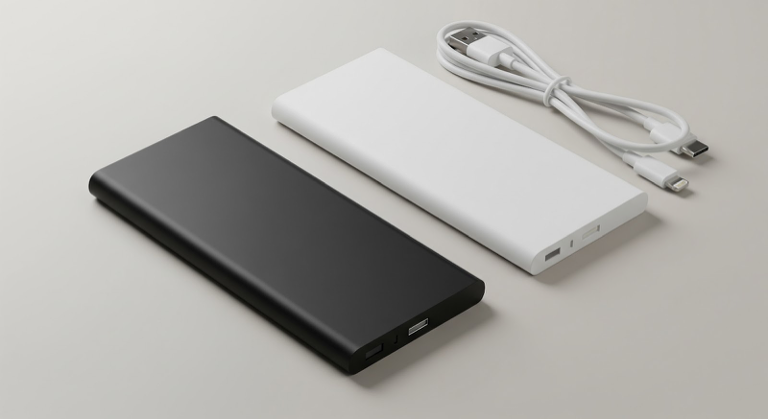
How to Choose a Mobile Battery: A Safety and Efficiency Perspective
When considering the purchase of a new mobile battery, we recommend selecting a product based not only on price or design, but also on the following criteria:
- Safety (PSE Mark):Choose products that display the PSE mark, which indicates compliance with Japan’s Electrical Appliance and Material Safety Act.
- Capacity Suitable for Your Usage: Select a model optimized for your use case—for example, a lightweight model for frequent portability, or a high-capacity model for emergency preparedness or charging multiple devices.
- Fast-Charging Standards: By choosing a product that supports fast-charging standards such as PD (Power Delivery) and provides output suitable for your devices, you can reduce charging time and improve overall efficiency.
Proper Disposal as a Social Responsibility
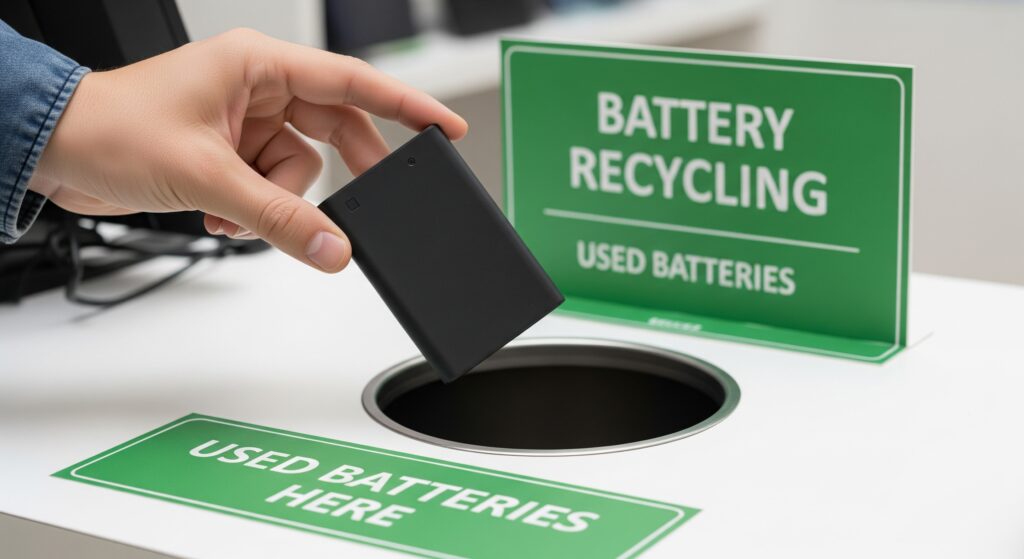
Mobile batteries must not be disposed of as general household waste (including non-burnable waste). There have been numerous incidents of batteries catching fire when compressed inside garbage collection trucks, making it essential to dispose of them through appropriate recycling channels.
Main Disposal Methods:
- Place the battery in a Small Rechargeable Battery Recycling Box installed at electronics retailers or home improvement stores (for products affiliated with JBRC).
- Bring the battery to designated collection points in accordance with instructions provided by local municipalities.
Properly recycling used batteries not only helps ensure safety but also contributes to the recovery and reuse of valuable materials such as rare metals. From the perspective of reducing environmental impact and supporting the SDGs, responsible battery disposal is highly important.
From Ownership to Sharing: Sustainable Use of Mobile Devices
The cycle in which individuals own multiple mobile batteries and dispose of and replace them as they degrade presents challenges in terms of environmental impact and management costs. In addition, concerns about accidents caused by improper disposal and fire incidents resulting from aging batteries may make many people feel that the effort required to manage and dispose of owned batteries is a burden.
As an alternative, making use of sharing services—where you use batteries only when needed and leave management and maintenance to professionals—can be a rational choice in today’s society. Under a thoroughly managed system, users can access safe and high-quality charging infrastructure at the right time, offering a new lifestyle option worth considering.
Images in this article were generated using AI.